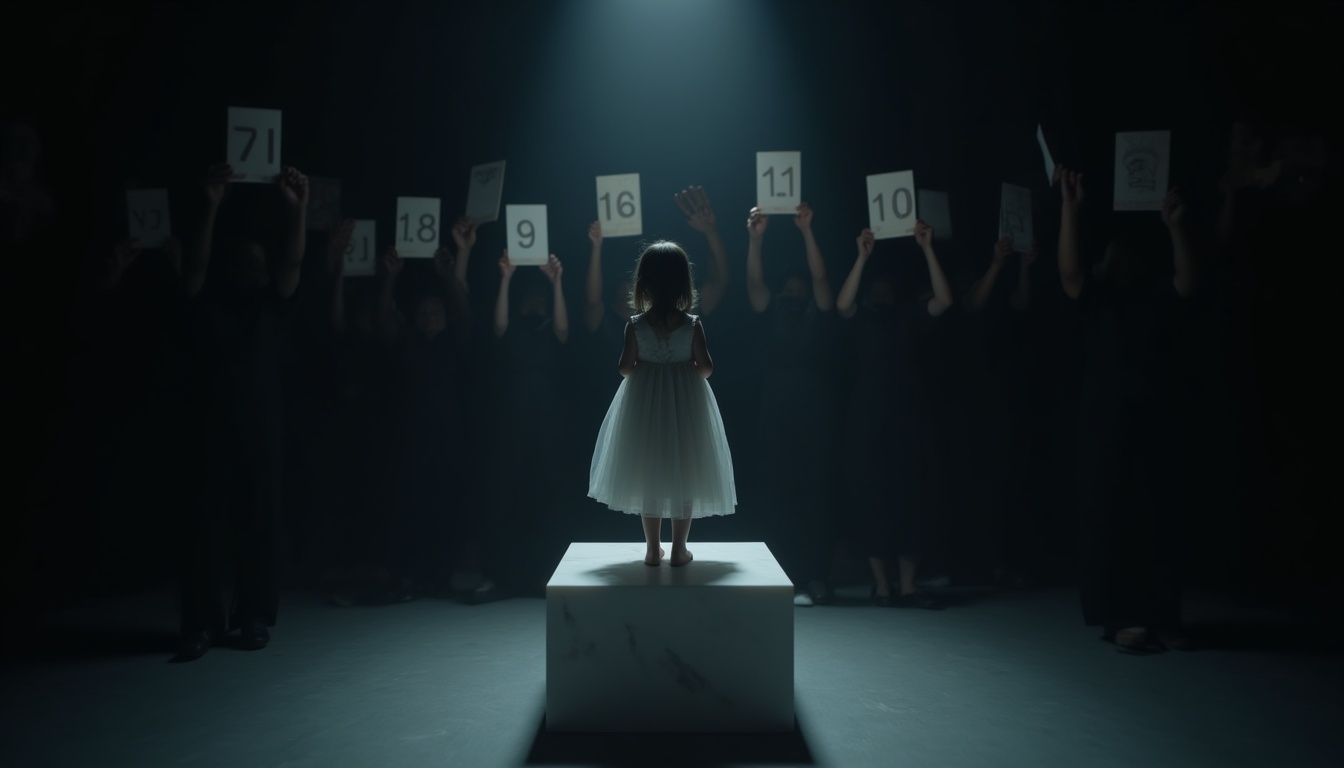
It starts innocently. The applause, the praise, the standing ovation. But the subtext is lethal: the praise only comes when she «hits the high note.»
In business, we call this «pay-for-performance.» In parenting, it’s a psychological trap.
1. Affection as a Performance Bonus
«We’re so proud of you»—only after the show. «You’re special»—only if the score was perfect. In this world, love isn’t a right; it’s a commission. If she wins, she’s «our star.» If she loses, she’s met with a cold, deafening silence.
2. Building the «People-Pleaser» Machine
This is how you break a human being. The child stops asking, «What do I want?» and starts obsessively wondering, «What do they expect from me?» They learn to be convenient to be loved. To smile through the pain so you’ll stay. They become experts at reading the room while losing the ability to read their own heart.
3. The Terror of Authenticity
These children grow into adults who are terrified of being themselves. Why? Because being «real» doesn’t come with a guarantee. They’ve been conditioned to believe that love is a transaction—earned, not given.
I don’t want my daughter to pay that price. I want her to know that love isn’t something she needs to audition for. It exists before the curtain rises and long after the lights go out. Regardless of the trophies. Regardless of the «success.»

