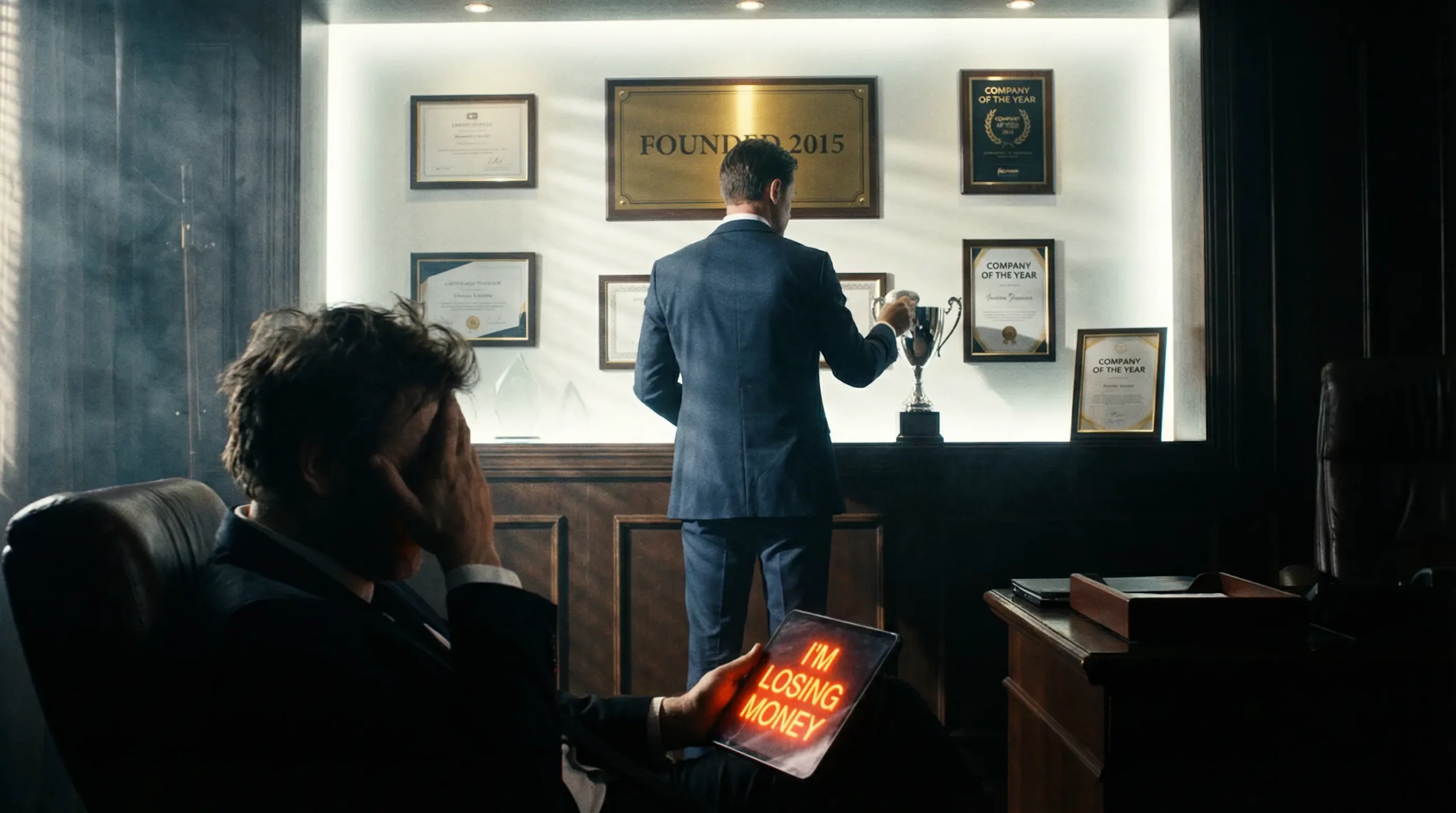

Open your website right now. Click on the «About» section. What do you see?
«We are a dynamic team of professionals…»
«Our company was founded in 2015…»
«Our mission is to provide high-quality service…»
Are you gagging yet? Because your client definitely is.

Welcome to the mausoleum.
What you call an «About Us» page is actually an obituary for your sales. You’ve turned this section into an altar to your own vanity. You’ve pinned up your certificates, awards, and company milestones like a kindergartener pinning drawings to the fridge, waiting for mommy to pat you on the head and say, «Good boy.»
But the market isn’t your mommy. The market doesn’t give a damn about you.
The brutal truth of client instincts
When a potential buyer lands on your site, their hair is on fire. They are losing money, choking on the competition, and losing sleep. Their bloodstream is pure cortisol and stress.
So they come to you looking for a lifeline, and you hand them a text that says: «In 2018, we opened our second office.» Do you know what they hear in that exact moment? They hear: «I don’t care about your pain; look how awesome I am.»
You lose. The client’s buying libido just flatlined. They left for someone who actually talks about them.

The anatomy of Naked Copy
The secret that we at Contented Mind sell for big money sounds like this: Your «About Us» page is actually about THEM. You shouldn’t write about your years in business. You should write about how your experience keeps the client from screwing up. You shouldn’t write about your mission to save the world. You should write about how you are going to save the skin of the specific person sitting on the other side of the screen.
Let’s strip away the corporate plastic and look at the naked difference.
❌ DEAD COPY (Ego): «Our agency has 10 years of experience implementing CRM systems and automating business processes according to international standards.»
✅ NAKED COPY (Instinct): «Are you sick of losing leads because your sales reps forget to follow up? We set up your CRM so your sales team runs like a conveyor belt, the system leaves zero room for slacking, and you can finally take a vacation knowing not a single dollar will slip through the cracks. And yeah, we’ve been doing this for 10 years.»
Feel the difference? In the second version, the client looks in the mirror and sees themselves, their fears, and their salvation. Your experience is just the closing argument, not the main event.

The bottom line: Stop stroking your ego over the year you were founded. Take off that suffocating corporate tie. Shift the focus. Tell the client exactly how your «professionals» are going to satisfy their primal need for safety, dominance, or saving energy.
Your story is completely pointless if there’s no room in it for the client to be the Main Character.