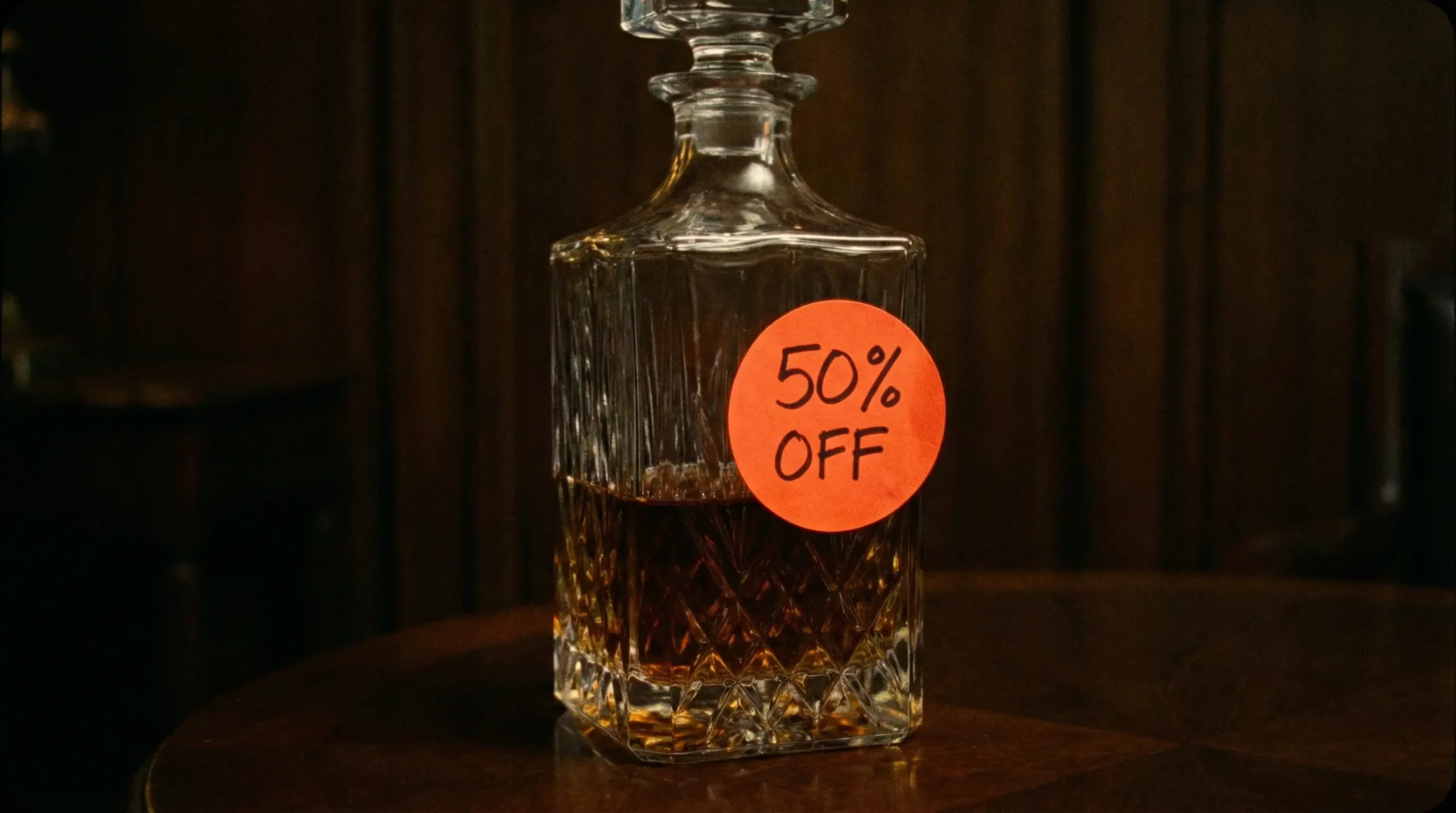

How you are castrating your business and why clients have stopped respecting you.
Picture the scene. You walk into a dealership to buy a new Mercedes S-Class. The sticker price is $150,000. You run your hand over the hood, you smell the rich leather interior. You want it.
Suddenly, a salesman rushes over and whispers: «Hey buddy. Today only, I’ll let it go for $90,000. Plus free floor mats. Deal?»
What do you feel in that moment? The joy of saving money? Hell no. You feel fear.
Your brain immediately sounds the alarm: «What’s the catch? Is it damaged? Was it flooded? Is it stolen? What is wrong with this car if they are willing to drop 40% just like that?»
Your desire to own that car—your «business libido»—drops to zero. Because an S-Class is about status. It’s about dominance. And dominance never goes on sale.
The Diagnosis: Marketing Desperation
Every time you offer a discount just to «close the deal,» you are publicly signing a confession of your own weakness. You are broadcasting to the entire market: «Please, somebody buy from me!»
When you slash your price, you are admitting to two deadly business sins:
-
Your product wasn’t worth the original price. You were lying to the client from the start. And they just figured it out.
-
Your marketing is garbage. You couldn’t articulate the value of your product with words. You lacked the arguments, charisma, and guts. Your only remaining argument is dumping the price.
This isn’t business. This is panhandling.
Discounts Are a Drug for Bottom-Feeders
Do you think a discount buys you client loyalty? Bullshit. A discount trains the client to expect a free ride. You aren’t attracting people who value your product; you are attracting «discount junkies.»
These are the worst clients on the planet:
-
They will grind you down over every penny.
-
They demand VIP service at economy prices.
-
They will be the first to jump ship to a competitor offering a 1% bigger discount.
-
They will never respect you. Because you cannot respect someone who doesn’t value themselves.
The Antidote: Naked Copy
Strong brands don’t haggle. They seduce. They create desire so intense that price becomes irrelevant.
At Contented Mind, we don’t teach you how to discount. We teach you how to charge prices that make your hands shake when you type them into the proposal.
We strip your product naked. We peel away the layers of boring «specs» and find the Unfair Advantage—that primal instinct (status, fear, sex, greed) that forces the client to pay any price.
Do you want to sell at a premium? Stop begging. Start dominating. Stop haggling. Start inciting desire.
CONTENTED MIND. THE UNFAIR ADVANTAGE OF NAKED COPY.