Some topics are impossible to avoid.
They’re overused. Overstated. Everyone knows them.
And yet — they’re still true.
Eat less, move more.
Clients refer you if they’re happy.
Consistency beats intensity.
The problem isn’t that these ideas are wrong.
The problem is — stating them directly doesn’t work anymore.
Let’s break down why.
Why Obvious Content Doesn’t Convince Anyone
The most common mistake?
Taking an obvious point, stating it plainly, and expecting it to feel like a revelation.
It won’t.
Your audience has heard it.
They’ve “agreed” with it for years — and changed nothing.
That’s why phrases like:
- “It goes without saying…”
- “This might sound basic, but…”
…usually signal that what follows won’t be read.
If it’s obvious, why write it?
If it’s boring, why keep reading?
What’s the Real Problem With “Obvious” Topics?
If an idea is obvious but you still want to write about it, that’s your clue:
Something’s not working.
Take this example:
If people actually did morning workouts, we wouldn’t need another blog post telling them to do it.
But they don’t.
Yet we keep writing about it.
Why?
Because doing is hard — writing is easy.
That’s where a real article begins.
How to Write About It Well
Don’t repeat the idea.
Break down why it fails in real life.
Not: “Do morning stretches.”
But: “Why stretching is the last thing your body wants at 6:30 a.m.”
Not: “Clients will recommend you if they’re happy.”
But: “Why clients leave quietly even when you think they’re satisfied.”
Now you’re no longer being obvious — you’re being honest.
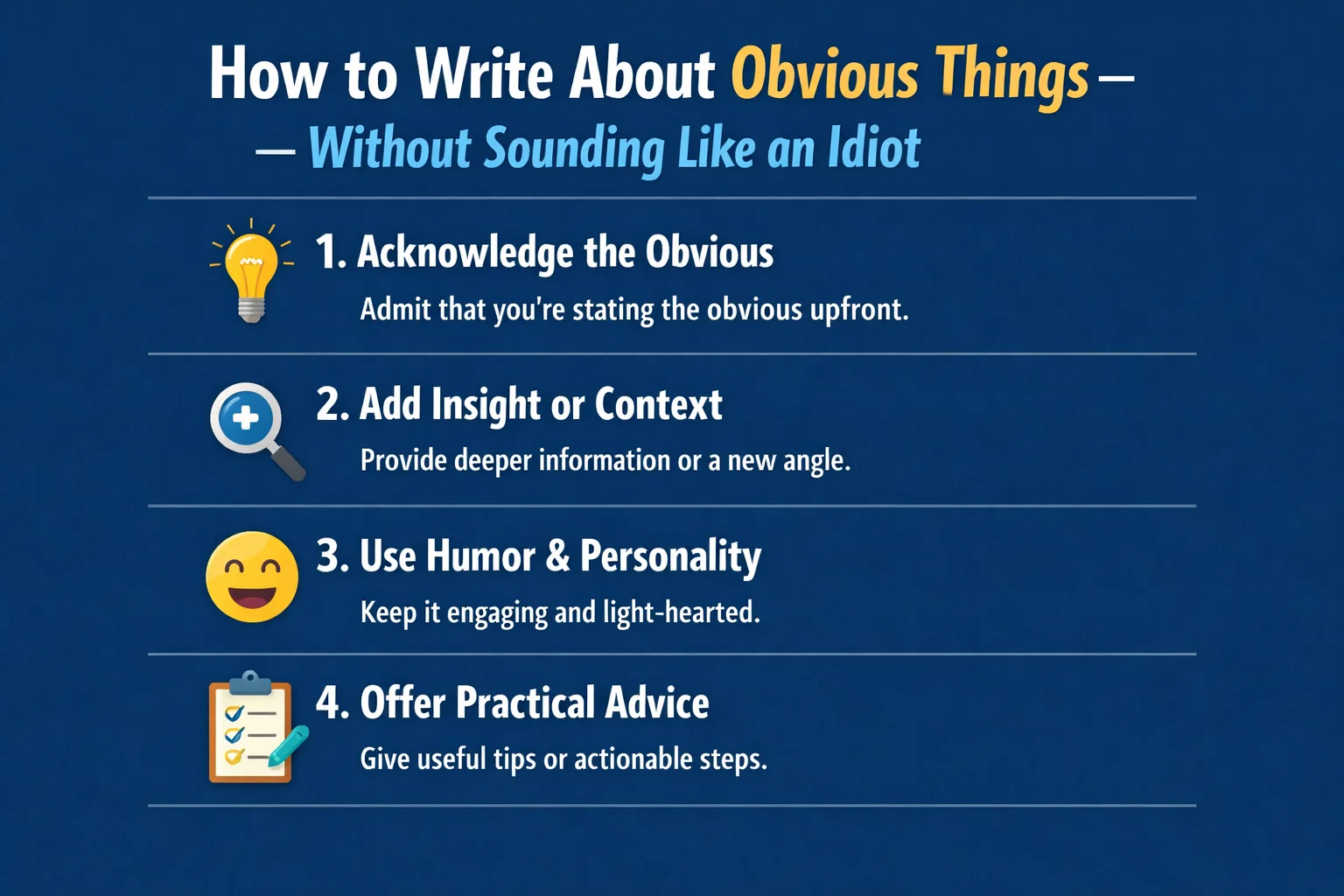
A Useful Trick: Acknowledge the Cliché Upfront
Try this format:
“Everyone says this works.
But most people fail to apply it.
Let’s explore why.”
The reader will:
- Nod at the first part (recognition)
- See themselves in the second (relatability)
- Stay for the third (insight)
It’s not a lecture.
It’s a mirror.
Flip the Frame: Go From “How To” → “Why Not”
Don’t start by explaining how something works.
Start by explaining why it usually doesn’t.
Example:
To stay healthy, you need to move more.
But most people feel physically wrecked in the morning.
Their body resists any extra effort.
That’s not laziness — it’s biology.
Now we can talk solutions that actually fit.
Now it’s not a cliché.
It’s context.
Another Example: Diet Advice
Telling someone with extra weight to “stop eating at night” is useless.
Here’s what actually happens:
- Evening hunger kicks in.
- There’s food in the fridge.
- The brain wants relief, not rules.
Telling someone “don’t eat” is friction.
Telling them “change what’s in your fridge” is frictionless.
That’s how you write about obvious advice — without repeating the mistake.
It’s the Same in Business
Everyone knows referrals come from satisfied clients.
Easy to say.
Hard to create.
Why?
Because satisfaction isn’t about how hard you worked — it’s about what the client expected.
You can give 100%.
But if their expectations were off?
They’ll leave feeling slightly let down.
And that feeling kills referrals.
Want to Go Deeper? Challenge the Comfortable Myths
“Business schools often teach that happy clients lead to referrals.
That’s false.
Referrals happen when results match expectations — not just when outcomes are good.”
Now you’re not recycling advice.
You’re rewriting the rules.
Why This Approach Works
Look at how powerful authors work.
Allan Carr doesn’t scream “Quit smoking!”
He explains why smoking is easy and quitting is hard.
He doesn’t judge — he joins the reader’s side.
Same with Dr. Dukan:
He doesn’t say “Cut carbs” — he explains why your body craves them.
That honesty builds trust.
You’re not lecturing.
You’re thinking alongside the reader.
Final Takeaway
When writing about obvious truths:
❌ Don’t state them bluntly
❌ Don’t assume they’re new
❌ Don’t lecture or oversimplify
✅ Find the contradiction
✅ Explain the friction
✅ Flip the lens
Then you’re not writing clichés.
You’re writing what no one else had the patience to unpack.